
OPINION: A Quiet Campus in a Loud World: Our Missing Voice on Justice
By Isabela Placencia
Unlike other universities, Rochester Christian University lacks visible
student activism on campus, which surprises me, as Jesus compelled his followers to advocate for the marginalized.
It seems we are only advocating for ourselves.
Initially, I noticed the lack of student activism in April 2024 when students at Columbia University, an Ivy League university in New York City, formed the Gaza Solidarity Encampment. The point of the encampment was to pressure Columbia University into calling an end to the ongoing genocide against Palestinians in Gaza and to divest from Israel. By April 29, over 100 tents were set up.
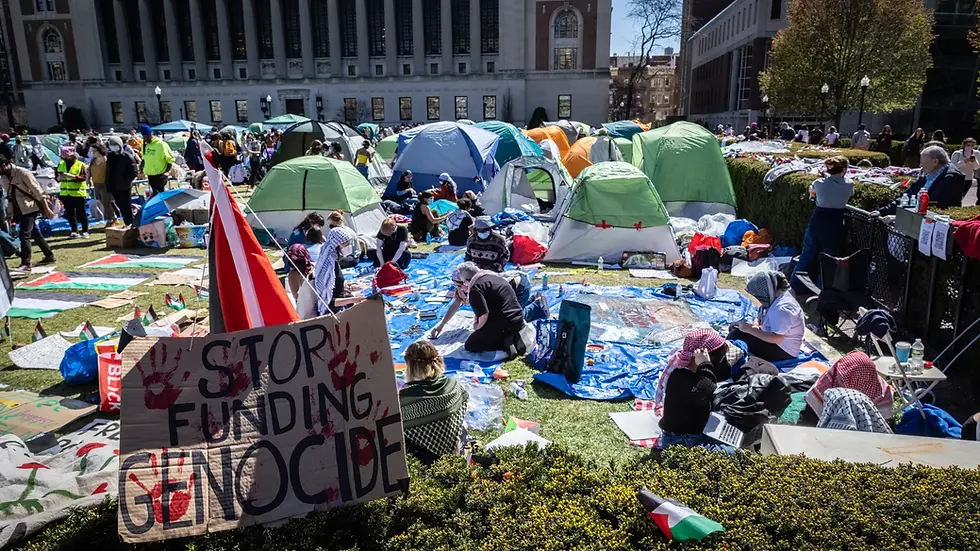
(Columbia University Encampment)
Columbia University students were willingly jeopardizing their futures to advocate for people they’ve never met — all in the name of justice. The police arrested over 100 demonstrators, students were suspended and Columbia canceled its commencement ceremony, according to a 2024 timeline in the Associated Press. Despite the risks, the Columbia students inspired students nationwide, which led to over 2,500 arrests.
During this time, I could not help but notice that RCU was not among those colleges speaking out. This surprised me, considering we’re a Christian liberal arts college grounded in the teachings of Jesus, according to the RCU website. To be frank, I’m an atheist who appreciates what Jesus is supposed to represent: compassion for the oppressed. What troubles me is that neither my peers nor Chapel reflect all the teachings of Jesus.
Love your neighbor as yourself
To me, it seems Chapel leaves out most of what Jesus preached and instead is geared toward self-help. If we actually cared, then most of us would advocate for Palestinians, immigrants, the poor and whoever else is needlessly suffering.
The golden rule in Matthew 22:39 reads: “Love your neighbor as yourself.” I don’t think Jesus was solely referring to the people residing in your neighbor or, let alone, your nation. No, Jesus loved everybody and commanded us to take care of each other.
For those born in America, we have certain privileges that we barely think about. We don’t have to worry about our houses or schools blowing up in airstrikes, but the reality of bombs is very real for people living in Iran, Lebanon, Gaza and occupied Palestine, due to America’s
and Israel’s joint imperial aggression.
Suffering around the world
According to an article by Mohammad Mansour’s on Aljazeera on Feb. 18, the minimum death toll of Israel's bombardment on Gaza has exceeded 75,000. I say “minimum” because the mentioned toll excludes deaths from starvation, disease and collapse of Gaza’s health system.

(Gaza)
Civilians across occupied Palestine in the West Bank and East Jerusalem are suffering due to Israel’s genocidal policies against Palestinians. The U.S shares some responsibility as we enable Israel’s aggression through economic, political and military support.
Sometimes America joins in on the bombing, too. On Feb. 28, America jointly launched airstrikes on Iran, killing Ayatollah Ali Khamenei in Tehran. The airstrikes struck a girl’s elementary school in southern Iran and killed over 160 children, according to a Reuters’ article on March 2.
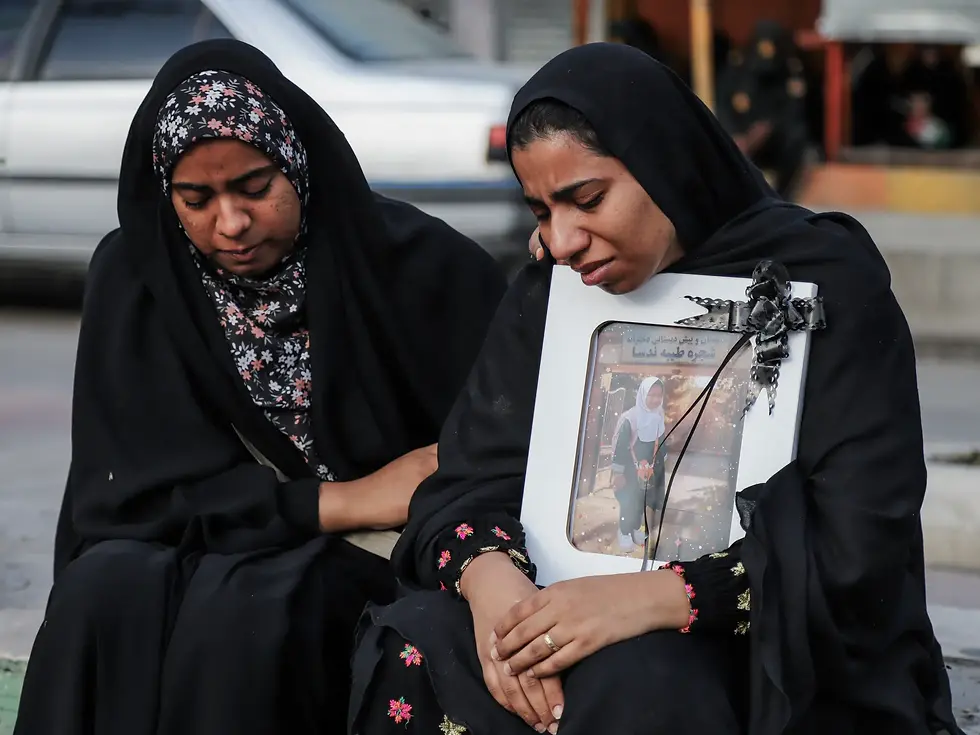
The Ayatollah and his regime have long been accused of human rights abuses against their own people, but bombing Iran’s citizens does not help them. It is apparent that our military aggression is putting ordinary people in harm's way. I write “our” because these airstrikes are being funded with “our” tax dollars.
(Women mourning in Iran)
As a consequence, civilians living in Israel and countries in the Persian Gulf, such as Saudi Arabia, Qatar and Jordan are also in danger. As taxpayers, we share some culpability for the unrest in the Middle East, which makes our voices relevant.
Suffering in the United States
Many people have come to America in hopes of a better life, only to be brutalized and forced into inhumane detention facilities. The United Nations’ High Commissioner Volker Türk has expressed concerns that U.S. government officials are using scapegoating tactics that are exposing “migrants and refugees to xenophobic hostility and abuse,” according to a Jan. 23 United Nations article. Türk has cited unlawful arrests and over 30 deaths reported in detention facilities.
Sen. Jon Ossoff, Democrat from Georgia, said his office has received over 500 reports of human rights abuses, including reports of overcrowding, unsanitary living conditions, inadequate food and water, and physical and sexual abuse, according to an August 2025 article in The BMJ, a peer-reviewed journal.
Despite President Donald Trump’s claims, this is not about national security, and the Department of Homeland Security is not going after the “worst of the worst.” Notably, fewer than 14% of the 400,000 arrested immigrants had prior convictions for violent offenses, according to a Feb. 9 article by CBS News.
The hyperbolic language used by the president and his officials — referring to immigrants as “garbage and imbred savages” and their immigration as an “invasion” — speaks to the xenophobic hostility Türk was talking about.
I don’t think Jesus would use such hateful language against people seeking his help.
A significant number of people residing in America are without homes, face food insecurity, and cannot afford medical care; it seems the administration only cares about spending billions of dollars on weapons that leave a trail of destruction.
According to a March 13 report by the Center for Strategic and International Studies, the Iran war cost $11.3 billion by day 6 and $16.5 billion by day 12. And the cost keeps escalating. According to an Associated Press article on March 19, the Pentagon is seeking $200 billion in additional funds for the Iran war.
I believe Jesus would want us to put America’s immense wealth toward people experiencing poverty.
Time shows that speaking out for people comes with great risks. Still, change does not come overnight and is worth fighting for. For example, racists hated civil rights leaders such as Martin Luther King Jr. and Nelson Mandela. They faced multiple arrests, with Mandela spending 27 years in prison for fighting South Africa's apartheid. Many nonviolent protests led by King were met with violent resistance from racist opponents, including attacks by police dogs and the use of firehoses.
Helping others despite risks
Jesus compels his followers to help others, regardless of the risks. He demonstrated this wish through the Parable of the Good Samaritan. In Luke 10, Jesus tells a story about a Jewish man traveling to Jericho who was attacked and left for dead by robbers. Two religious people pass him — despite also being Jewish. A Samaritan took pity and helped the man — even though Samaritans and Jews were in conflict.
The point is that the Samaritan helped the man because it was the right thing to do; it didn’t matter that he hailed from a different group. Let’s follow his lead. Let’s be that good Samaritan by publicly advocating for the oppressed and suffering.
RCU should use Chapel as a platform to spread this message. As individuals, we can write letters to government officials, spread awareness on social media, and support human rights organizations.
I call on the RCU community to raise your voices and to help others — even those who look or believe differently than you do.
Comments