
Q&A with RCU Head Women's Volleyball Coach Sam Mangum
By Jordan Look | Photos by Allison Scott
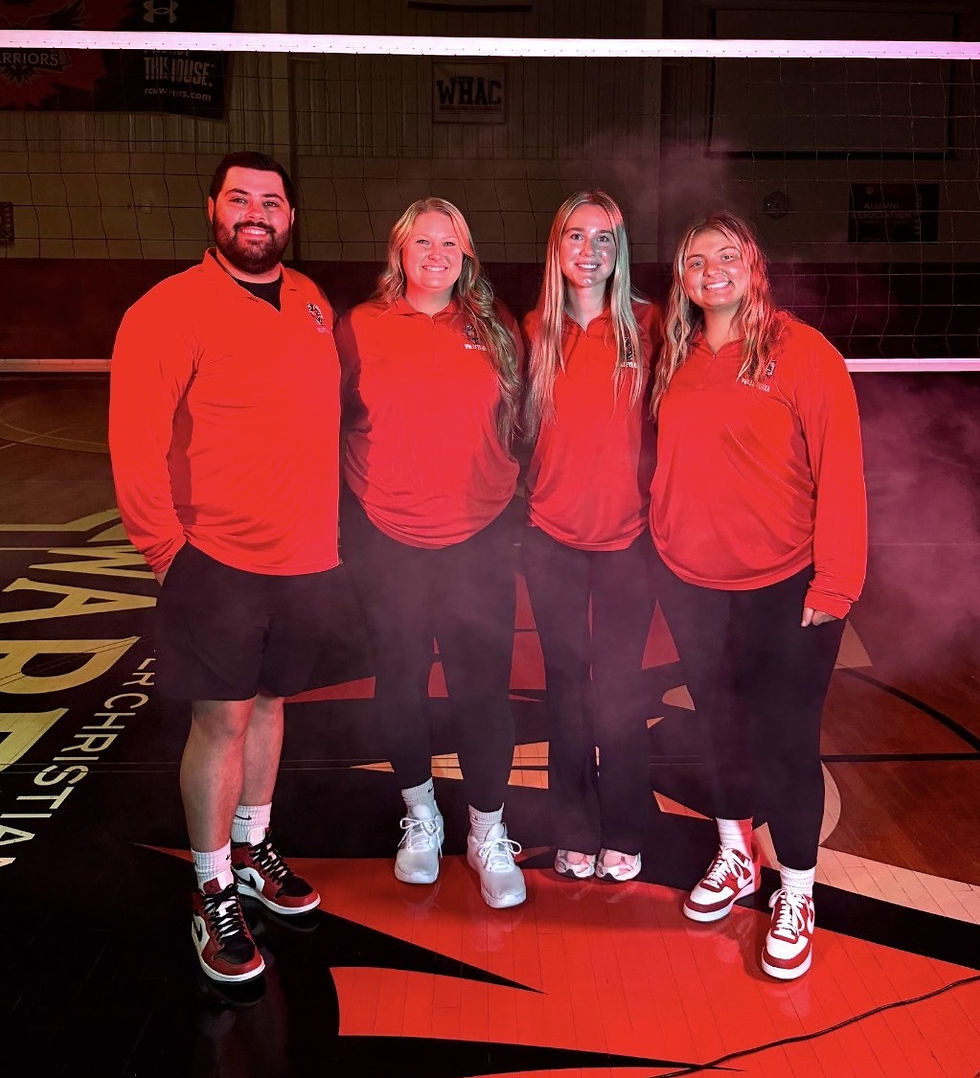
The 2026–2027 academic year marks Coach Sam’s first season at Rochester Christian University. Major changes are underway in the volleyball program to build stronger players and a healthier team culture—from athletic development to off-court relationships.
Q: What is your coaching background?
A: I've coached for 12 years. I've coached varsity high school, high-level club teams, and 10-year-olds. I started coaching in 2015 at Bloomfield Christian. I coached there for three years before returning to school. I coached club for many years, served as an assistant coach at Macomb Community College for three years, coached at Rochester High School for a year, and now I'm here!
Q: What do you believe brought you here?
A: The simple answer is God. Ten years ago, I was in Israel and Palestine worshiping on a rooftop when I felt the Lord say, “You're going to be a warrior of people”. I asked him what that meant, and he said, “Not yet”. So I said, “Okay,” and kept living my life.
Eventually, this opportunity came up. Coach Nash, the previous head coach, reached out and asked if I would consider taking over the program. In that season of my life, I didn't feel like it was for me, and I hadn't asked God yet, so I told her no. She asked a second time, and I said no again. Then I got COVID-19 and couldn't get out of bed for 10 days. She asked me a third time, and at that point I thought, “Okay, I should probably pray about this”.
I decided to go through the interview process, thinking, “I probably won't get it, but I'll try anyway”. Then I received the offer. I was scared to ask what God was going to say because I was afraid he might say yes—or that he might say no. The night before I had to make a decision, I was up at 3 a.m. and said, “Okay, God, I'll finally ask You”. He brought me right back to that memory on the rooftop when he said I was going to be a warrior of people. I asked, “What does that have to do with anything?” And he said, “What's their mascot?” I realized, “Oh, okay. They're the Warriors”. That made it very clear, and I accepted the offer the next day.
After returning home from a trip, I started second-guessing myself. I felt like the enemy was trying to twist the peace I had. I asked God again, “I don't know if I should do this. Is it really for me?” He said, “Look up.” The license plate directly in front of me read “Warriors”. I said, “Okay, I won't ask again”. Since stepping into this role, the Lord has been leading the way, and it has been really cool to depend on him.

Q: You coach with your husband and have for years. Would you say your coaching styles balance each other out, and how does volleyball play a role in your marriage?
A: Yeah, I think it's really natural. Growing up, I prayed for someone I could share all aspects of life with. I prayed, “God, please give me someone who knows how to play volleyball”—not just backyard volleyball, but someone who truly understood the sport, because I knew this was going to be my ministry. I felt at age 17 that the Lord called me into volleyball as a ministry. I didn't know where it would take me, but I wanted my husband to be on that mission with me.
We met playing pickup volleyball. He played at Western Michigan University, and we started coaching together at Bloomfield Christian before we started dating. That set a strong foundation of mutual respect as coaches while we were friends.
My advice is always to run the race God calls you to. Every once in a while, pick your head up and look beside you. If someone is running alongside you—not ahead of you or behind you—then you can start paying attention. That’s how it happened for us.
In terms of balancing each other, he is very analytical, which is a major strength. I see the big picture, while he catches the details. He asks hard questions, which is important on a staff. Because of our foundation, when he challenges my coaching thoughts, it never feels personal—I know he is for me. At the end of the day, God comes first, my spouse comes second, and coaching comes third. He also brings high energy and excitement to keep things lighthearted, while I stay focused and locked in.
Q: Since taking over this program, what have been the biggest changes you've seen within the team?
A: The biggest changes have been a sense of unity and a hunger for more than just the sport. It’s been amazing to see our Wednesday Bible studies. Student-athletes who came here primarily for athletics or academics are now deepening their faith. During week one, someone said, “I don't even know how to read my Bible”. Now they’re actively discussing Scripture throughout the week.
Getting 31 players in a program aligned around the same goal can be difficult, but seeing them function as one unit is so encouraging. Many players have also made huge physical strides on the court because they are bought into something greater than themselves. Nobody is playing for the name on the back of their jersey—they’re fighting together for the team.
Q: You emphasize team culture. Why do you believe it is so crucial in building a program?
A: Volleyball requires complete unity; you can't succeed with just one person when there are six players on the court. My job isn't to force players to play for me—my job is to lead by example, love them, challenge them, and build a relationship where they want to play for me and for the team.
Without culture and mutual respect, drama takes over and ruins the student-athlete experience. To get the most out of people, you have to show you care first—both coach-to-player and player-to-player. You don't have to be best friends with everyone, but when there is a baseline of trust and respect, it creates both a winning record and a winning culture.
Q: Outside of volleyball, what has been your favorite part of being at RCU?
A: The community. It’s so relationship-focused. I can walk across campus to grab a snack and end up spending two hours catching up with people in different offices. Everyone—from housing and admissions to student life—is genuinely invested in the success of the university and its students. People on campus don't just ask “How are you?” as a routine greeting; they actually stop and wait to listen to your answer.
Q: What is one primary goal you have for your players, both on and off the court?
A: Off the court, my biggest prayer is that they grow closer to Christ and understand that their worth isn't defined by volleyball. When your entire identity depends on a sport, every error feels catastrophic. I want them to know that whether they win or lose, their worth is defined by who God says they are.
On the court, our team goal is to win a national championship through unity. On an individual level, I want every player to feel confident in their skill progression, learn new things, and feel pushed in a supportive environment.
Q: Is there anything else you'd like to add?
A: Get to know people and don’t be afraid to stand out. As coaches, we are working to build cross-sport relationships across campus. We’re all here because we love Jesus and we love sports, so don't be afraid to support one another!
Comments